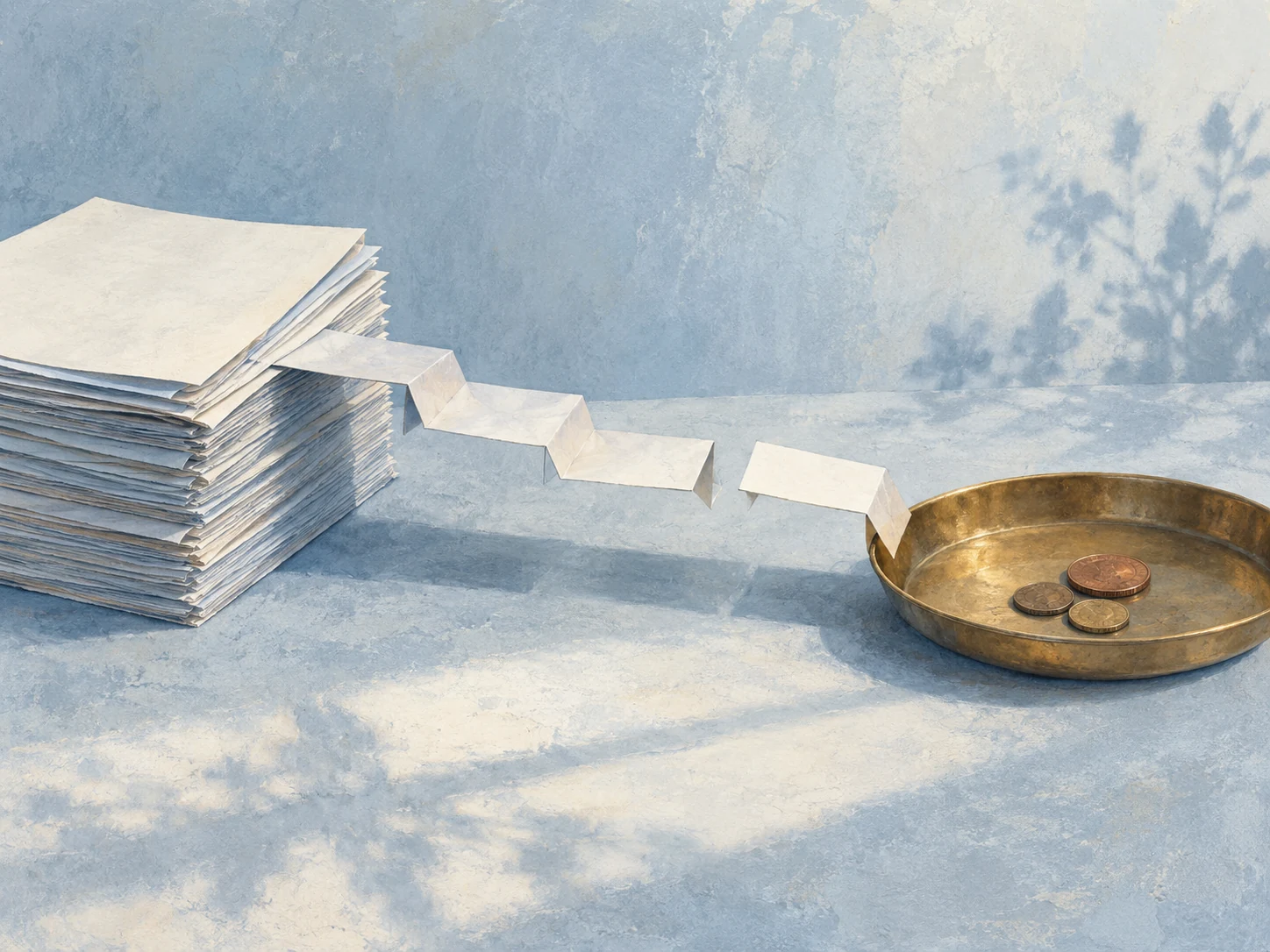
If inflation is down, why is my grocery bill still up?
Inflation can slow while your shopping bill keeps rising. Follow one basket through two years to see why.
In this story
You hear that inflation is coming down. Then you buy the same groceries and the bill is higher again. The headline and the receipt can both be right.
The missing distinction is between how much something costs and how quickly that cost is changing. A lower rate of increase still leaves an increase.
Two different numbers.
A price index summarizes the level of prices relative to a reference period. An annual inflation rate measures the percentage change in that index from a year earlier. The Bank of England explains the distinction using a representative basket of goods and services. [1]
A historical example makes the difference tangible. In January 2024, UK food and non-alcoholic beverage prices were 7% higher than a year earlier. That annual rate had fallen for ten consecutive months. Yet the overall price level was around 25% above January 2022, according to the Office for National Statistics. Slower increases had not undone the earlier ones. [2]
Follow one basket.
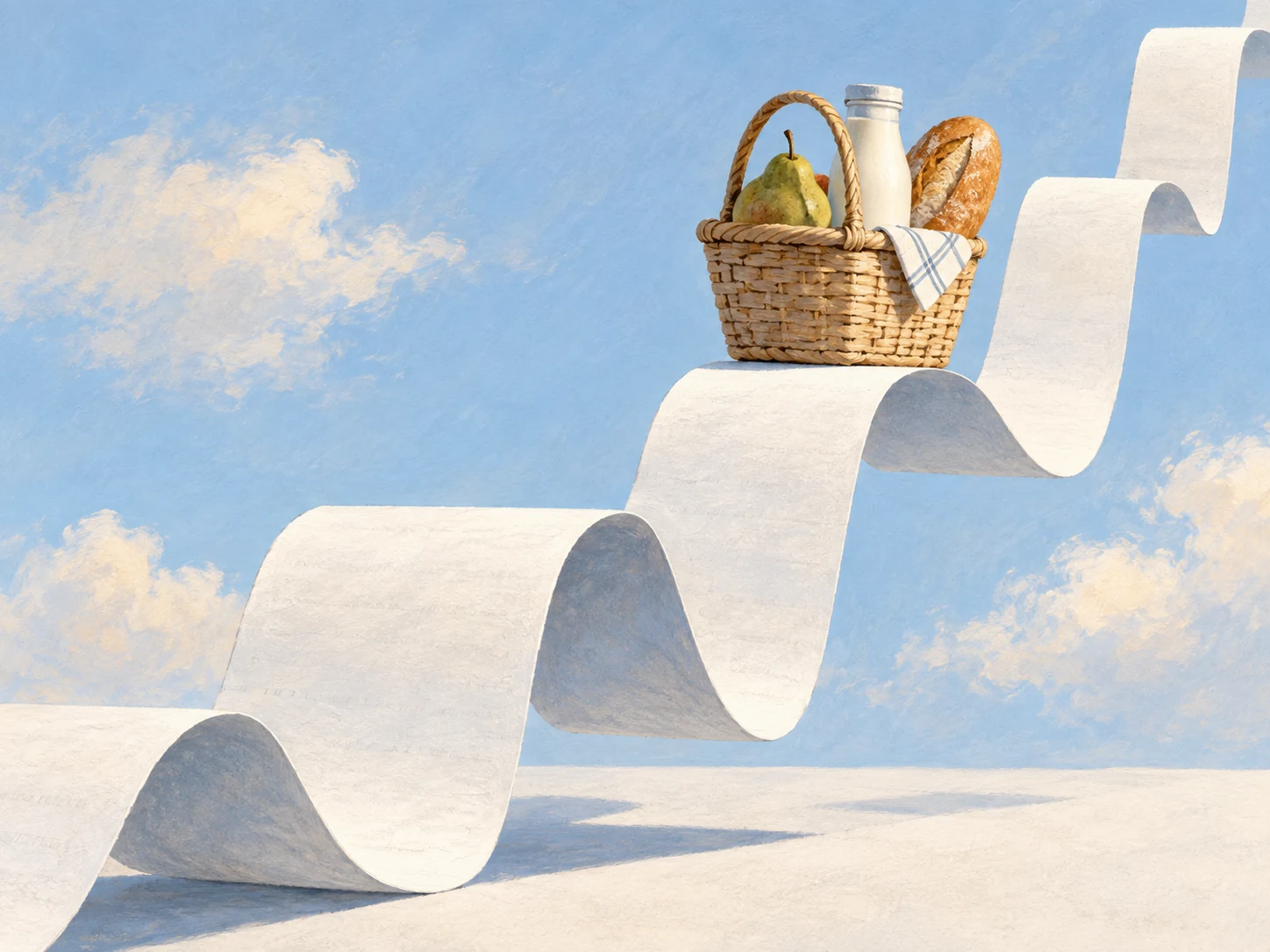
Now set those historical figures aside. Imagine a fixed shopping basket that initially costs $100. Suppose its price rises by 8% in the first year and 2% in the next. These are invented rates, chosen to make the arithmetic easy to follow.
The second year adds only $2.16, compared with $8 in the first year. That is a substantial slowdown. But it takes the bill from $108 to $110.16, not back toward $100.
Notice the base of the calculation: the second year’s 2% applies to $108. Adding 8% and 2% would miss the extra 16 cents created by compounding. The cumulative rise over both years is 10.16%.
What would falling prices mean?
A slowing inflation rate is called disinflation. A sustained fall in the overall price level is deflation. At zero inflation over a given period, the overall price level stays unchanged; a negative rate means it falls. [3]
For our basket, a second-year rate of 0% would leave the cost at $108. A rate of −2% would take it to $105.84. Even that decline would leave it above the original $100: undoing an earlier increase requires a large enough subsequent fall.
Slowing the rise does not erase the rise.
Your own shopping bill.
An economy-wide index combines many prices. Individual prices can fall while the index rises, and your spending mix may differ from the representative basket. The ONS offers a personal inflation calculator for that reason. [2]
Our example holds the basket fixed to isolate one distinction. With an unchanged budget, a more expensive basket is harder to afford even after its rate of increase slows. Reading the headline starts with asking which number changed: the level, the rate, or the rate’s pace of change?
Calculate what the second year adds.
An illustrative question, not an assessment of exam readiness. Your answer stays on this page and is not saved.
Sources & notes
- Bank of England · What is inflation?
- Office for National Statistics · Cost of living insights: Food, 14 February 2024
- Federal Reserve Bank of St. Louis · Inflation, disinflation and deflation, 23 August 2023
Sources checked 7 September 2026. Numerical examples and learning questions are original illustrations by The Margin. Historical events are identified by their event dates.